Lake Katwe
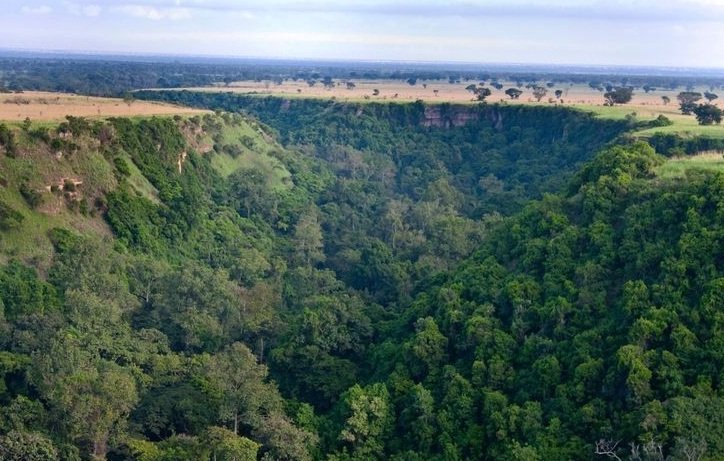
Location: Kasese District, southwestern Uganda, within the Katwe-Kikorongo Volcanic Field, near Katwe-Kabatoro Town Council on the edge of Queen Elizabeth National Park. It’s north of the Mweya Peninsula and close to Lake Edward.
Formation: An explosion crater lake, formed by violent volcanic activity roughly 8,000–10,000 years ago — one of about 52 crater lakes found within Queen Elizabeth National Park. It covers roughly 8 square miles, and being an “explosion crater” lake with no outlet, water flows in via streams but never out — trapping and concentrating minerals over time into a hypersaline lake.
What it’s known for: Uganda’s chief salt-producing lake, and one of the oldest continuously operating salt industries in Africa — production here dates back roughly 700 years, with some sources tracing it to the 13th or 16th century. European explorers John Speke and Graham Grant documented the salt works in 1863 and 1864, describing the product as remarkably pure in taste and color.
How salt is harvested: The lakebed and shoreline are divided into small, privately-owned “salt pans” or “gardens” (roughly 9-10 feet wide, a few feet deep), dug and demarcated by hand using hoes, earth, and wood. Extraction relies on evaporation — salt crystallizes in the shallow pans as water evaporates, and after about a week the salt is harvested. There are two main mining activities: rock salt extraction from the main lake (done only by men) and salt “winning” from the shore pans (done by both men and women). A local cooperative oversees licensing for extraction from the lake’s center to keep the resource from being depleted.
Peak season: Salt mining is most active in the dry seasons — January to March and July to September — when evaporation is strongest.
Economic and human context: Salt mining remains the main livelihood for the Katwe community since the salty soil doesn’t support agriculture. It’s physically demanding, low-paying work — miners use traditional protective measures against the highly saline water, and safety/health conditions at the site are a recognized local concern. This is worth acknowledging with care rather than glossing over in guest-facing content — it’s a living, working community, not a staged attraction.
Nearby: Lake Munyanyange, an alkaline lake right next to Katwe, is a bird sanctuary known as a migratory stop for lesser flamingos (roughly August to November).
Visiting: Typically a half-day (or minimum ~2 hour) stop as part of a Queen Elizabeth NP itinerary. Local guides — often the salt miners themselves — walk visitors through the history and methods, and it’s common to buy locally-made crafts from vendors at the site as a way to support the community directly.
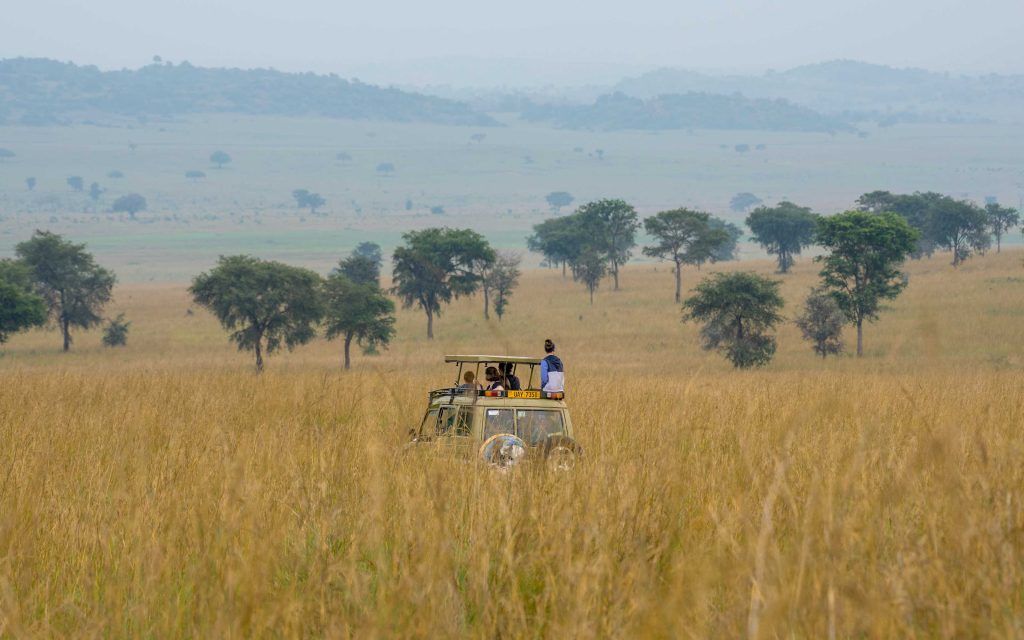
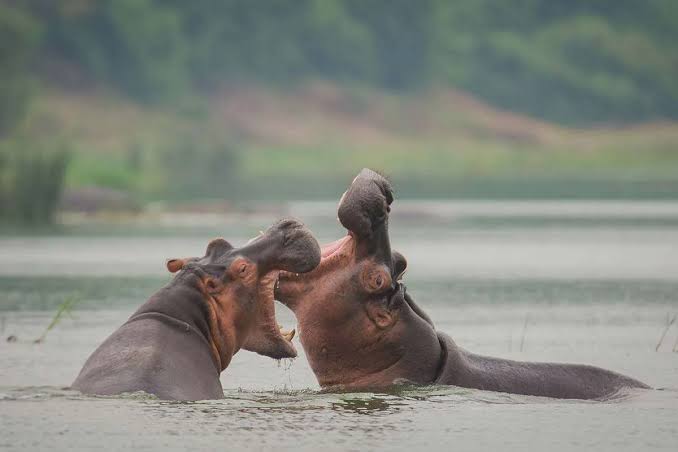
Positioning angle: A strong “living history” and cultural-economic story for QENP itineraries — pairs naturally with game drives or the Kazinga Channel cruise, and offers something QENP’s wildlife activities don’t: direct human interaction and a centuries-old industry still practiced by hand.